

How Automation Is Transforming the Corrugated Box Printer Slotter Machine Market
- BOX MAKER
- HIGH GRAPHIC PRINTER VARNISH DRYER
- HIGH SPEED COMPUTERIZED PRINTER
- AUTOMATIC PRE-FEEDER MACHINE
In the dynamic world of packaging manufacturing, the demand for speed, accuracy, and customization has never been higher. Consumers expect faster delivery and more creative packaging, while manufacturers face the challenge of meeting these demands efficiently and cost-effectively. At the center of this transformation is one crucial piece of equipment: the corrugated box printer slotter machine.
Traditionally, printer slotter machines handled the core operations of printing, slotting, creasing, and cutting corrugated sheets. But as the industry embraces Industry 4.0, automation has redefined how these machines operate — driving remarkable gains in precision, throughput, and operational intelligence.
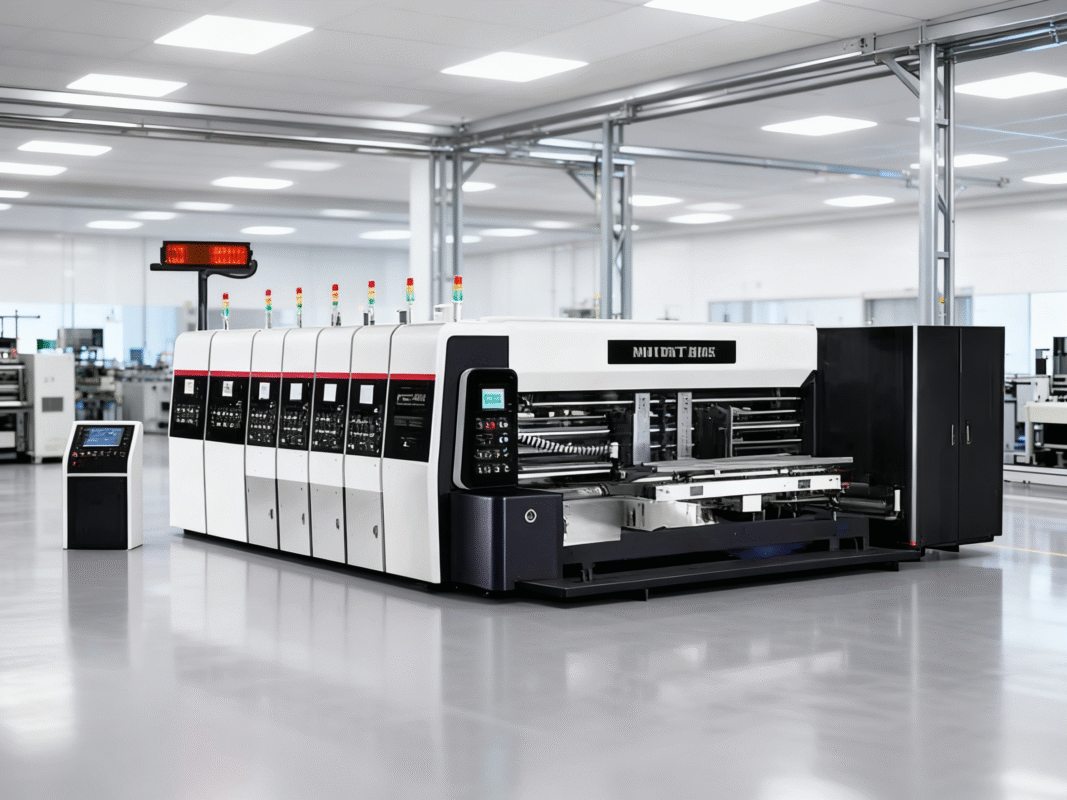
1. The Shift from Manual to Intelligent Production
Not long ago, corrugated box manufacturing relied heavily on manual setups and operator expertise. Machines required frequent adjustments, and production speed depended largely on human skill. However, the introduction of automation — from servo-driven systems to AI-assisted controls — has completely changed the landscape.
Modern automated printer slotter machines can perform complex tasks such as:
- Automatic sheet feeding and alignment
- Servo-controlled printing registration
- Digital pressure and color control
- Precise slotting, scoring, and die-cutting
- Automatic stacking and delivery
This integration of mechanical precision with digital intelligence minimizes manual intervention and allows continuous, high-speed production with consistent results.
2. Enhanced Precision and Print Quality
In packaging, precision isn’t just about dimensions — it’s also about how well a design translates from digital artwork to physical box. Automation ensures accuracy at every step, especially in color registration and print consistency.
Key Advancements:
- Servo Motors and Encoders: These systems control print cylinders and slotting units with micron-level precision, ensuring perfect alignment even at high speeds.
- Automated Color Matching: Sensors and digital ink management systems automatically adjust ink density and flow to maintain consistent tones.
- Vision Systems: Built-in cameras monitor print quality in real time, detecting and correcting misprints instantly.
As a result, packaging manufacturers can guarantee flawless printing across large production runs — a crucial advantage in brand-sensitive industries like food, e-commerce, and consumer goods.
3. Faster Changeovers and Shorter Downtime
Time is money in manufacturing. Traditional printer slotter machines required lengthy manual setups whenever a new box design or print order was introduced. Automated systems have virtually eliminated these bottlenecks.
How Automation Helps:
- Auto-Setup Features: Machines can automatically adjust printing plates, slotting knives, and folding parameters for new jobs.
- Recipe Storage: Operators can store and recall production settings instantly from digital memory.
- Automatic Cleaning Systems: Ink chambers and rollers clean themselves between jobs, reducing downtime.
These features enable quick changeovers, making short-run and customized production both practical and profitable — something that was once too time-consuming to achieve manually.
4. Integration with Digital Control and IoT Systems
Automation has brought the corrugated box printer slotter machine firmly into the era of smart manufacturing. Modern systems are now connected through IoT (Internet of Things) networks, allowing for data-driven decision-making and remote supervision.
Benefits of Connectivity:
- Real-time Monitoring: Track speed, performance, and energy use from a centralized dashboard.
- Predictive Maintenance: Sensors detect wear or anomalies early, prompting service before a breakdown occurs.
- Cloud Integration: Production data is shared securely for analytics, performance tracking, and continuous improvement.
Through these digital ecosystems, managers can oversee multiple machines — even across different facilities — ensuring optimal productivity and resource utilization.
5. Improved Efficiency and Reduced Waste
Automation doesn’t just make operations faster — it makes them smarter. With automated controls ensuring precise sheet feeding, color application, and cutting, material waste and rework are significantly reduced.
Efficiency Gains:
- Optimized Sheet Utilization: Automated alignment ensures each sheet is used to its maximum potential.
- Ink and Energy Savings: Intelligent ink delivery and motor control systems minimize resource consumption.
- Consistent Output: Fewer rejects mean higher yield and better profitability.
For large-scale manufacturers, even a small reduction in waste per batch translates to major cost savings over time — while also supporting sustainability goals.
6. Supporting Short-Run and Custom Packaging Trends
E-commerce and brand personalization have driven demand for short-run, on-demand packaging. Traditional printer slotters struggled with frequent changeovers, but automated machines thrive in this environment.
Automation enables:
- Digital print integration for quick artwork changes without new printing plates.
- Automatic parameter adjustments for different box sizes or materials.
- Flexible production scheduling through centralized control systems.
Manufacturers can now meet customer demands for smaller, customized orders without sacrificing speed or quality — giving them a competitive advantage in a rapidly diversifying market.
7. Workforce Transformation: From Operators to Technicians
As automation takes over repetitive and precision-dependent tasks, the role of human workers is evolving. Instead of manually operating machines, workers are now monitoring systems, managing software, and analyzing performance data.
Key Shifts:
- Operators transition into machine supervisors and technical specialists.
- Skill requirements shift from mechanical to digital literacy.
- Safety improves as human interaction with moving parts decreases.
This evolution in workforce roles enhances both safety and efficiency, allowing employees to focus on higher-value tasks such as process optimization and quality assurance.
8. Greater Safety and Ergonomic Design
Automated systems have drastically reduced manual involvement in high-risk operations like blade adjustment, ink replacement, and sheet feeding. Today’s machines are designed with safety sensors, automatic guards, and emergency stop mechanisms that protect operators at every stage.
Safety Enhancements Include:
- Enclosed cutting and slotting zones
- Real-time overload detection
- Automated lifting and handling systems for heavy components
By improving workplace safety, automation not only reduces injury risks but also contributes to smoother, uninterrupted production.
9. Driving Sustainability and Green Manufacturing
Sustainability is a major focus in packaging today. Automated corrugated box printer slotter machines help manufacturers minimize their environmental footprint in several ways:
- Reduced waste: Precise control systems cut fewer rejects and offcuts.
- Energy efficiency: Smart motors adjust power usage based on load.
- Eco-friendly inks and coatings: Automated systems manage ink flow to reduce overuse and contamination.
This combination of efficiency and sustainability allows packaging producers to meet global environmental standards while improving profit margins.
10. The Future of the Printer Slotter Market
The corrugated box printer slotter machine market is evolving rapidly as automation becomes standard. Future innovations are expected to integrate AI-powered predictive analytics, robotic handling systems, and fully digital printing solutions that bridge the gap between traditional and digital production lines.
Emerging Trends:
- Hybrid printing systems that combine flexo and digital capabilities.
- Robotic feeding and stacking units for fully hands-free operation.
- Smart maintenance systems powered by AI diagnostics.
As these technologies mature, the boundaries between machine, operator, and management system will blur — creating truly autonomous packaging production environments.
Conclusion
Automation has transformed the corrugated box printer slotter machine market from a labor-intensive process into a data-driven, intelligent manufacturing ecosystem. The result is a new era of precision, efficiency, and adaptability that allows manufacturers to meet modern market demands with confidence.
From real-time monitoring and predictive maintenance to flexible short-run production and reduced waste, automation is not just a trend — it’s the foundation of the future of corrugated packaging manufacturing.
Companies that embrace these automated solutions today are positioning themselves for long-term success in a market where speed, sustainability, and precision define competitive advantage.
CONTACT US


Guangdong Pinlong Precision Technology Co., Ltd.
We are always providing our customers with reliable products and considerate services.
If you would like to keep touch with us directly, please go to contact us