

How a Corrugated Cardboard Cutting Machine Improves Precision and Efficiency?
- BOX MAKER
- HIGH GRAPHIC PRINTER VARNISH DRYER
- HIGH SPEED COMPUTERIZED PRINTER
- AUTOMATIC PRE-FEEDER MACHINE
Anyone who has spent time in a packaging plant knows that a single millimeter can make or break a production line. A slightly uneven cut can lead to misaligned folds, wasted sheets, and rejected boxes — small problems that quickly turn into big costs. That’s why modern packaging facilities are increasingly relying on corrugated cardboard cutting machines to bring accuracy, speed, and reliability to every stage of production.
These machines do far more than just slice through cardboard. They integrate digital precision, automation, and intelligent control systems to deliver consistent results with minimal waste. Let’s take a closer look at how these cutting systems enhance precision and efficiency, reshaping the future of corrugated packaging manufacturing.
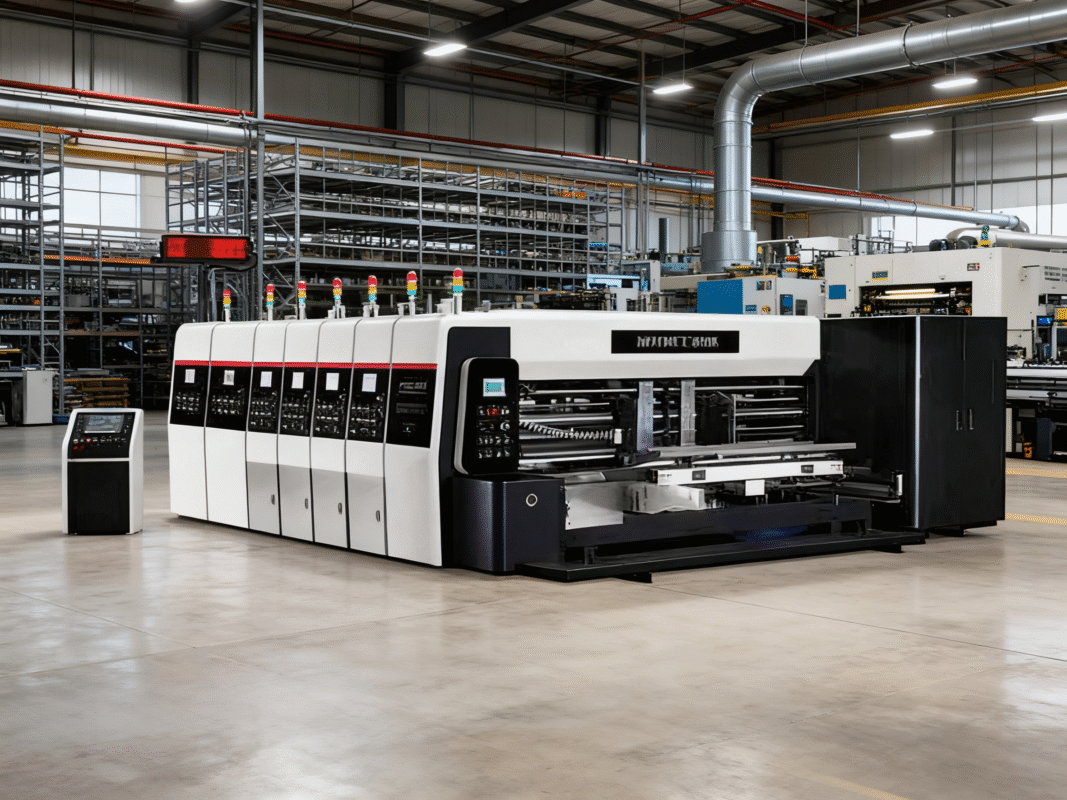
1. Engineered for Unmatched Cutting Precision
Precision is the heart of every packaging operation. A perfectly printed sheet means little if the cutting isn’t exact. Corrugated cutting machines address this with advanced control systems and refined engineering that maintain accuracy sheet after sheet.
a. Servo-Driven and CNC Technology
Modern machines use servo motors and computer numerical control (CNC) systems that govern every movement of the blade and feed rollers. This digital control ensures uniform pressure, exact blade positioning, and precise dimensions on every cut — even during long, continuous runs.
b. Laser and Vision Alignment Systems
Many newer machines employ laser guidance or vision sensors that automatically adjust the cutting path in real time. These systems detect registration marks and printed patterns, ensuring each cut lines up perfectly with the printed design.
c. Automatic Pressure and Blade Calibration
To maintain accuracy, automated systems continuously calibrate blade depth and pressure based on the board’s thickness. This prevents overcutting, fiber tearing, or compression damage, leading to crisp, clean edges every time.
In short, precision isn’t left to human judgment — it’s engineered into every motion.
2. Driving Efficiency Across the Production Line
Beyond precision, corrugated cutting machines dramatically improve operational efficiency — reducing downtime, optimizing material use, and streamlining workflow.
a. High-Speed, Continuous Operation
Automated feeding and cutting systems operate at high speeds, processing hundreds of sheets per hour. With servo-controlled sheet alignment and rapid blade movements, these machines maintain output without sacrificing accuracy.
b. Faster Changeovers
Switching between designs, sizes, or box styles is a common bottleneck in production. Today’s machines feature digital recipe storage and automatic setup adjustments, allowing quick changeovers with minimal operator input.
c. Reduced Material Waste
Built-in optimization software arranges box templates on the sheet to maximize material usage. The result: less scrap, lower costs, and a smaller environmental footprint.
d. Integrated Stacking and Conveying
Automated stacking and delivery systems eliminate manual handling between stages. Sheets move seamlessly from cutting to folding or gluing, maintaining a consistent production rhythm.
Efficiency in cutting translates to efficiency across the entire production line.
3. Ensuring Consistency and Repeatability
Repetition without deviation — that’s what makes automation powerful. Once a design and cut path are programmed, the machine reproduces it with micron-level accuracy across thousands of sheets.
Consistency Benefits:
- Uniform box dimensions for reliable assembly
- Reduced rework and fewer rejected sheets
- Perfect alignment for folding, gluing, and printing operations
With built-in data storage, operators can recall previous settings instantly, ensuring identical results for future production runs without recalibration or guesswork.
4. Enabling Design Flexibility and Customization
Packaging is no longer just functional — it’s part of brand identity. From display boxes to intricate retail packaging, brands demand custom shapes, windows, and structural designs. Corrugated cutting machines make this flexibility possible.
a. Digital Cutting for Short Runs and Prototypes
Unlike traditional die-cutting, digital cutting systems use software-driven blades or lasers, eliminating the need for physical dies. This enables quick turnaround for small batches, product trials, or custom projects.
b. Complex Geometries, Same Precision
Advanced cutters handle detailed curves, perforations, and fold lines with ease. Whether it’s a simple shipping box or an intricate display unit, accuracy remains consistent.
This level of design agility allows packaging manufacturers to respond quickly to client demands and market trends.
5. Lowering Labor Costs and Reducing Human Error
Manual cutting methods are slow, inconsistent, and labor-intensive. Corrugated cutting machines automate repetitive tasks, reducing the need for large teams and minimizing the potential for human error.
Key Advantages:
- Automated feeding and cutting mean fewer operators per line
- Built-in safety enclosures prevent workplace injuries
- Digital precision removes human alignment and measurement mistakes
Operators can now focus on monitoring quality and managing production, not manually handling sheets or adjusting blades.
6. Smart Technology for Predictive Maintenance
Downtime can cripple productivity. To counter this, modern corrugated cutting machines incorporate smart monitoring systems that track key performance indicators in real time.
Predictive Maintenance Features:
- Sensors detect blade wear, vibration, and motor temperature
- Automatic alerts notify operators before issues cause breakdowns
- Maintenance data helps schedule service during low-demand periods
By preventing unplanned stoppages, smart diagnostics keep machines operating at peak performance — increasing uptime and overall efficiency.
7. Sustainable and Cost-Effective Production
Sustainability is no longer optional; it’s a business imperative. Corrugated cutting machines support greener production through precision, waste reduction, and energy efficiency.
Sustainability Benefits:
- Optimized sheet layouts reduce scrap material
- Energy-efficient motors cut power consumption
- Compatibility with recycled or lightweight board materials
Better resource management not only protects the environment but also improves profit margins through lower material and energy costs.
8. Seamless Integration with Smart Manufacturing Systems
Modern packaging operations rely on digital interconnectivity. Corrugated cutting machines can now integrate with ERP (Enterprise Resource Planning) and MES (Manufacturing Execution Systems) for real-time monitoring and coordination.
Integration Advantages:
- Automated production tracking and scheduling
- Live performance data and efficiency reports
- Smooth coordination between printing, cutting, and folding stages
This digital integration transforms the cutting process into a connected, intelligent node within a larger automated production ecosystem.
Conclusion
In a competitive packaging landscape, precision and efficiency are more than technical goals — they’re the foundation of profitability. The corrugated cardboard cutting machine delivers both through automation, smart technology, and meticulous engineering.
By combining pinpoint accuracy, reduced waste, faster production speeds, and lower labor costs, these machines enable manufacturers to deliver consistent quality and adapt to evolving customer needs. Whether you’re producing high-volume shipping boxes or custom retail packaging, a modern cutting system ensures every sheet counts — literally and economically.
CONTACT US


Guangdong Pinlong Precision Technology Co., Ltd.
We are always providing our customers with reliable products and considerate services.
If you would like to keep touch with us directly, please go to contact us